Give yourself more time than you think you need: Nikola Hamilton on going full time
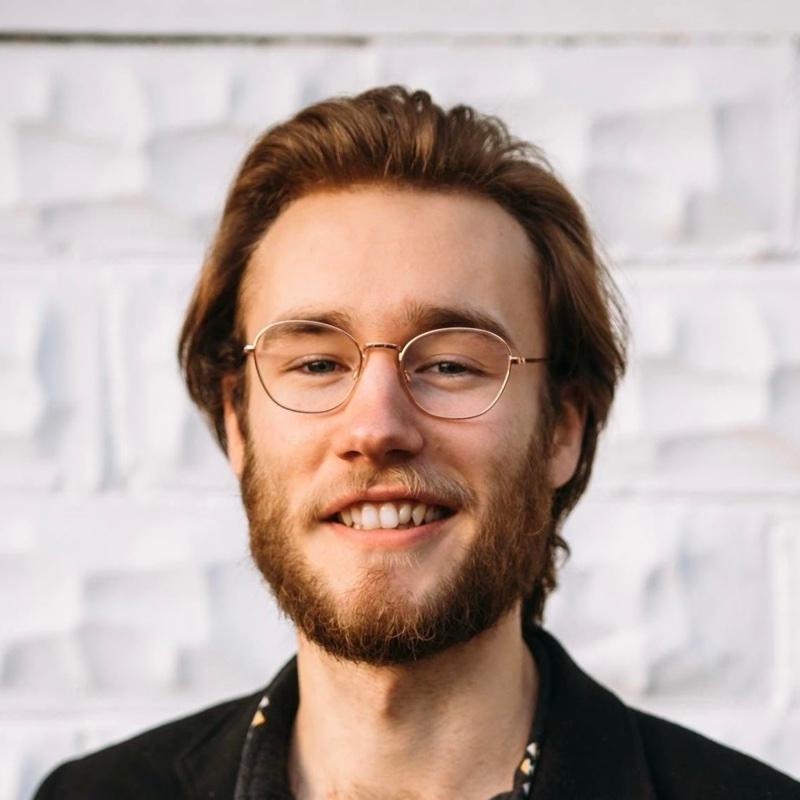
Narrator Nikola Hamilton went full time in 2026. How he made the jump, keeps big LitRPG casts straight, and paces a full-time schedule.

- Published
- 10 November 2026
- Reading time
- 7 min
A lot of audiobook narrators build their careers on evenings and weekends, around another job. Nikola Hamilton did that for years. He engineered at John Marshall Media in New York, on the other side of the glass from some exceptional narrators, and spent most of his free evenings and weekends in his own booth narrating indie and small-press titles. This year he went full time.
Nikola has also been using PromptVO since its early days, and a few of the features in it today, sepia mode and auto-pause among them, started as notes he sent me from the booth. I asked him how he made the jump. His answers are below, in his words.
How did you get into narration, and what made 2026 the year you went full time?
I've been a fan of audiobooks for a long time. When I was a kid my dad would read to my siblings and I. The Lord of the Rings, John Carter of Mars, books and series like that. It instilled a love of books and storytelling, so as an adult I've listened to a lot of audiobooks. I've also got the performer bug. I acted in plays as a kid and in college, and I've been in a handful of bands as an adult.
In 2020 when some of my other recording studio work was on hold I began trying out narrating. I started out just getting what I could on ACX here and there and that was most of my narration experience for a while. In 2021 my partner and I moved to NYC and I got a job as an audio engineer at John Marshall Media. I learned so much by getting to work with some exceptional narrators in that capacity. All the while I was narrating projects on the side, mainly indie projects or small publishers, through ACX, Ahab Talent, and other similar casting websites.
Starting some time in 2024 or 2025 I had enough narration projects so that when I wasn't engineering I was in the booth narrating. It was to the point where I was narrating most evenings and weekends for stretches of time during a project, and that was exciting but also exhausting and not sustainable. So that was a strong signal that I could step back from engineering and JMM and focus on narrating full time.
What did you pick up in the engineer's chair that changed how you narrate?
Oh man, it's hard to pick one thing, but I think what was most impactful was being exposed to the many different ways of narrating. From prepping, to warming up, to narrating, there are a lot of ways to approach each piece of the narration process. Being able to see how other narrators do things and then being able to try things out and keep what works for me has really helped me find my voice and refine my way of working.
What does a project look like for you now, from manuscript to final files?
I'm still doing a lot of indie/small pub stuff so I do mostly self-recording and I'm often editing and mastering files myself too.
First things first, I read through the manuscript and make notes. I'll note any words to look up for pronunciation, especially made-up words to check in with the author about if it's fiction. Also if it's fiction I'll make notes on characters and their traits, both in a technical sense like accent, timbre, pace, etc., as well as in a more nebulous "who are they" way; like who they remind me of, and I'll pull any quotes that feel particularly them to me. I'll mark up the script a bit in places that I know will trip me up in the booth, like if there's a long piece of dialogue and at the end it says "he whispered" I'll put a note of that at the start of the dialogue.
Once I've made it through the book I'll get to narrating. I record using the punch recording method, which is pretty standard these days, and that's sort of like editing as you go which does eat up a bit more time in the booth but I've found ultimately it makes the project go a lot faster and smoother in the end. This is also where PromptVO shines for me. The auto-scroll and catching misreads as I go along are reeaaally nice to have when I'm self-recording.
If I'm also responsible for editing the project I'll usually start "editing" while I'm still recording. Which since I'm mostly editing as I go during recording is more of a spot check process before sending files for QC/proofing. Then I get pickups back, record those and insert them (always double-checking inserts to prevent audible edits), and bounce the final masters.
The auto-scroll and catching misreads as I go along are reeaaally nice to have when I'm self-recording.
What makes LitRPG different to narrate, and how do you keep all those voices straight?
Yeah, the big character lists make for a unique challenge! Haha. But it can be fun to stretch myself and develop new and interesting character voices. Another way that LitRPG is different from audiobooks more broadly is the use of effects in the audio. It's sort of borrowing some production ideas from audio dramas or radio plays to add an extra layer of immersion to the audio experience. I tend to use a pretty light touch when I utilize any effects but some pitch shifting, a touch of reverb, or subtle chorusing effects can be neat ways to differentiate characters. It's another knob of creativity to turn when developing character voices.
And in terms of keeping the voices straight I have a folder in every project or series titled Character Samples and when a new character appears I export a line or two of dialogue into that folder for future reference... except when I forget to do it which happens more often than I'd like. Lol.
What have you learned so far about pacing a full-time schedule?
GIVE YOURSELF MORE TIME THAN YOU THINK YOU NEED. That's my mantra moving into 2027.
I'm ADHD and Level 1 ASD, or AuDHD as it's now commonly called, and one way that manifests for me is that I'm very bad at estimating how much time it'll actually take me to finish a project. When I'm looking at scheduling a project I have a tendency to think I'll be perfectly efficient in prepping, narrating, and recording and life won't throw any curveballs my way while I'm working. Of course that's never the case and stuff comes up: I'm feeling off one day, my computer auto-updates and nothing is working, or my upstairs neighbor is pet-sitting their friend's tap-dancing elephant, etc. So building in the time I need to get things done at a sustainable pace where I'm not rushing or pushing too hard is something I've been learning the hard way. But the important thing is that I'm learning it.
What would you tell a narrator who's balancing narration with another job and wondering whether to make the jump?
Ultimately, knowing when to leave a job for full-time narration, or any creative career full-time, is dependent on someone's individual circumstances. But for me, as someone who is both pragmatic and filled to the brim with anxiety, one thing that really helped me feel comfortable making the jump was having a financial lifeline. In my case, that was a flexible freelance gig I could return to if there were any extended gaps between projects. I'll still pick up an engineering shift at JMM every now and then. That could also look like 2-3 months' worth of expenses saved up to give yourself some runway. Or even having enough projects on the calendar for the next 2 or 3 months. It will always feel like a risk, so you'll have to make it tolerable for you before you leap.
What are you working toward next?
I'd like to start branching into more genres that I haven't done before, or that I haven't done much of yet. As one example, YA books are near and dear to my heart and I'd love to narrate some angst-filled coming-of-age stories. Alongside that I'd like to start working on more trad pub projects. I love the indie/self-pub world and I am very happy with the books I've done thus far. Working with larger publishers just feels like the next frontier for me and I'm excited by that.
Nikola Hamilton is a narrator, director, and audio engineer. You can find his work at nikolahamilton.com. My thanks to him for taking the time.
